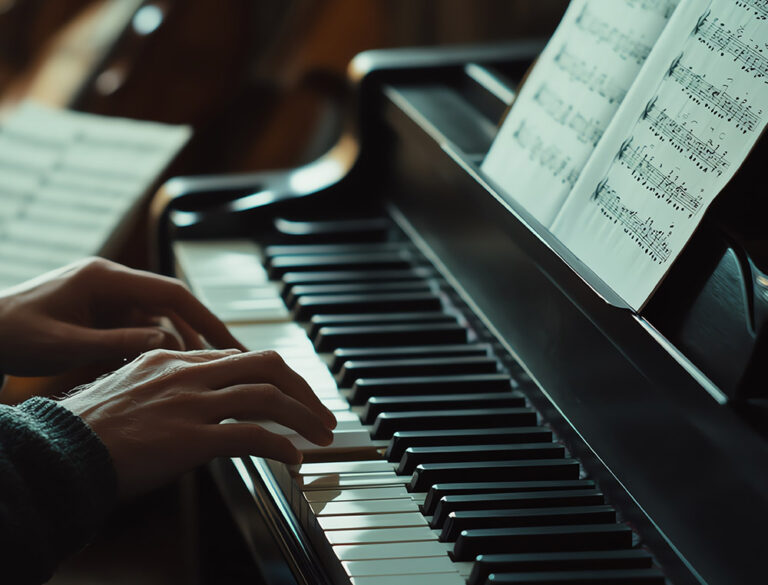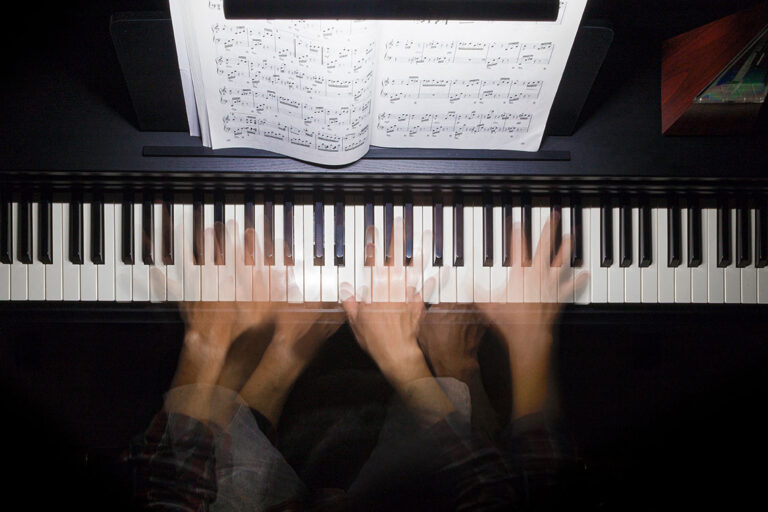
Playing the piano is as much a physical endeavor as it is a mental one. Whether you’re navigating a lightning-fast Mozart passage or the intricate polyphony of Bach, finger dexterity and technique are your foundation. As a pianist with decades of experience performing and teaching, I’ve refined methods that blend tradition with science to help students unlock agility, precision, and control. Let’s dive in.
1. Start with a Warm-Up (Your Hands Will Thank You)
Let’s be honest: warming up isn’t glamorous. It’s the broccoli of piano practice—essential, but easy to skip. But here’s the thing: even Martha Argerich doesn’t dive into a concerto cold. Think of your hands as athletes. Would a sprinter bolt off the blocks without stretching? Nope. Spend 5–10 minutes each day waking up your fingers, and you’ll dodge stiffness and play smarter.
- Gentle stretches: Open and close your fists slowly, then stretch each finger backward gently (no forcing!).
- Finger lifts: Rest your hand flat on a table. Lift each finger one at a time, keeping others relaxed.
- Wrist circles: Rotate wrists clockwise/counterclockwise to loosen tendons.
Why it works: Cold muscles and tendons are prone to injury. A 2017 study in the Journal of Hand Therapy found that targeted warm-ups improve flexibility and reduce fatigue.
2. Build Strength with Finger Exercises
Finger exercises are like push-ups for pianists. They’re not thrilling, but they work. I’ve had students groan at Hanon drills—until their trills started sounding like pearls, not pebbles. The key? Focus on quality, not speed. Imagine you’re sculpting each note, not racing through it.
- Hanon Exercises: These classics (like The Virtuoso Pianist) target independence and evenness. Start slowly, focusing on lifting fingers cleanly from the knuckle.
- Czerny Studies: Op. 299 or Op. 740 challenge speed and articulation.
- Five-Finger Patterns: Play C major up/down with staccato, then legato. Keep wrists relaxed.
Pro tip: Use a metronome. Speed is irrelevant until control is flawless.
3. Master Scales and Arpeggios (Yes, Really)
Scales are the ABCs of piano technique. Boring? Maybe. Foundational? Absolutely. When I taught at conservatories, students often asked, “Why scales?” My answer: “Because Horowitz did them daily, and so should you.” They’re the secret sauce for evenness and control.
- Daily practice: Rotate through major, minor, and chromatic scales.
- Focus on weak fingers: For most pianists, the 4th and 5th fingers lag. Drill trills between 3-4 and 4-5.
- Arpeggios: Practice broken chords with a “rolling” wrist motion to avoid stiffness.
Remember: Evenness > speed.
4. Tackle Technical Études
Études get a bad rap as “study pieces,” but they’re more like personal trainers. Chopin’s Op. 10 No. 2? It’s basically a boot camp for your 3rd and 4th fingers. I still use études to troubleshoot my own playing. They’re like having a coach whisper, “Hey, fix that weak spot.”
- Chopin Op. 10, No. 2: For 3rd/4th finger agility.
- Liszt Un Sospiro: Balances melody with arpeggiated accompaniment.
- Brahms 51 Exercises: Builds hand independence.
Advice: Isolate trouble spots. Repeat a single measure 10x slowly, then gradually increase tempo.
5. Prioritize Hand Posture and Alignment
Ever tried writing with a cramped hand? Now imagine playing La Campanella that way. Ouch. Good posture isn’t about sitting primly—it’s about letting your hands move freely. Picture your wrist as a suspension bridge: stable but flexible.
- Curved fingers: Imagine holding a small ball. Flat fingers strain tendons.
- Wrists level with keys: Avoid sagging or lifting.
- Relaxed shoulders: Tension here creeps into hands.
Fun fact: Glenn Gould’s famously low bench promoted his unique curved posture, but it’s not a one-size-fits-all solution. Experiment mindfully.
6. Slow Practice: The Secret Weapon
Slow practice feels like watching paint dry. But here’s the magic: it’s how your brain learns. Think of it as building a house. You wouldn’t slap on the roof before laying bricks, right? Play slowly, and you’ll spot the cracks before they become craters.
- Metronome work: Set it to 60 BPM. Play a passage at half-speed, ensuring every note is deliberate.
- Rhythmic variations: Swing eighth notes (long-short) to expose unevenness.
- Silent practice: “Play” on a table to focus on finger articulation without sound.
Science says: Slow practice enhances neural pathways for accuracy.
Additional reading: https://www.frontiersin.org/journals/behavioral-neuroscience/articles/10.3389/fnbeh.2015.00349/full
7. Common Mistakes to Avoid
We’ve all been there: cramming for a recital, fingers flying until they ache. Spoiler: It backfires. I once practiced a Liszt étude for hours straight and couldn’t play it for days. Pain is your body’s red flag. Listen to it.
- Over-practicing: More than 45 minutes without a break causes diminishing returns.
- Ignoring pain: Tingling or soreness? Stop. Tendonitis is a pianist’s nemesis.
- Rushing progress: Dexterity develops over months, not days.
8. Leverage Technology
Your phone isn’t just for Instagram. Apps like Pro Metronome or Synthesia are like having a teacher in your pocket. I use them to film my hands mid-practice—nothing humbles you faster than watching your pinky collapse like a noodle.
- Metronome apps: Pro Metronome lets you program complex rhythms.
- MIDI analysis: Tools like Synthesia visualize uneven keystrokes.
- Video recording: Film your hands to spot tension or inefficient motion.
Final Thoughts: Patience + Consistency = Progress
Here’s the truth: Great technique isn’t built in a week. It’s a slow simmer, not a microwave meal. But every scale, every étude, every mindful repetition adds up. As my old mentor used to say, “The piano rewards those who show up—not just with their hands, but their heart.”
Start today: Pick one scale, one étude, and one slow practice session. Your future self will thank you.
About Anna Robinson: Anna Robinson is a pianist and educator dedicated to helping students achieve technical mastery while fostering a lifelong love for music. With certification from ABRSM, her methods blend classical rigor with modern science.
Loved this guide? Share it with a fellow pianist, and let’s grow together!